

You’ve probably heard the term VO2 max thrown around in fitness circles, on your smartwatch, or maybe from your doctor.
But what does it actually mean? And more importantly, what can it tell you about your health?
Whether you’re a weekend warrior or just trying to feel better in your daily life, understanding your VO2 max might be one of the most valuable things you can do for your long-term wellness.
In this blog, Dr. Joye breaks down the basics of optimal oxygen consumption. Keep reading to learn what your VO2 max means for you, or contact the InterveneMD team to discuss how we can optimize your VO2 max in Charleston.
The Basics: What Is VO2 Max?
VO2 max is the maximum amount of oxygen your body can use during intense exercise. The “V” stands for volume, “O2” is oxygen, and “max” means (you guessed it) maximum.
It’s measured in milliliters of oxygen per kilogram of body weight per minute (mL/kg/min). VO2 max is widely considered the gold standard for measuring cardiovascular fitness.
Simply put: the higher your VO2 max, the more efficiently your heart, lungs, and muscles work together. A higher number means your body is better at delivering and using oxygen, which translates to better endurance, more energy, and a stronger engine overall.
Why Does My VO2 Max Matter?
Here’s where things get interesting. Research consistently shows that VO2 max is one of the strongest predictors of long-term health outcomes—even more so than many traditional risk factors.
Studies reported in publications like the Journal of the American Medical Association and the New England Journal of Medicine have linked higher cardiorespiratory fitness to significantly reduced risk of heart disease, type 2 diabetes, certain cancers, and all-cause mortality.
In fact, a landmark study found that low cardiorespiratory fitness was a stronger predictor of death than smoking, high blood pressure, or obesity. But this finding is not a reason to panic; it’s an opportunity to pay attention.
How Is VO2 Max Measured?
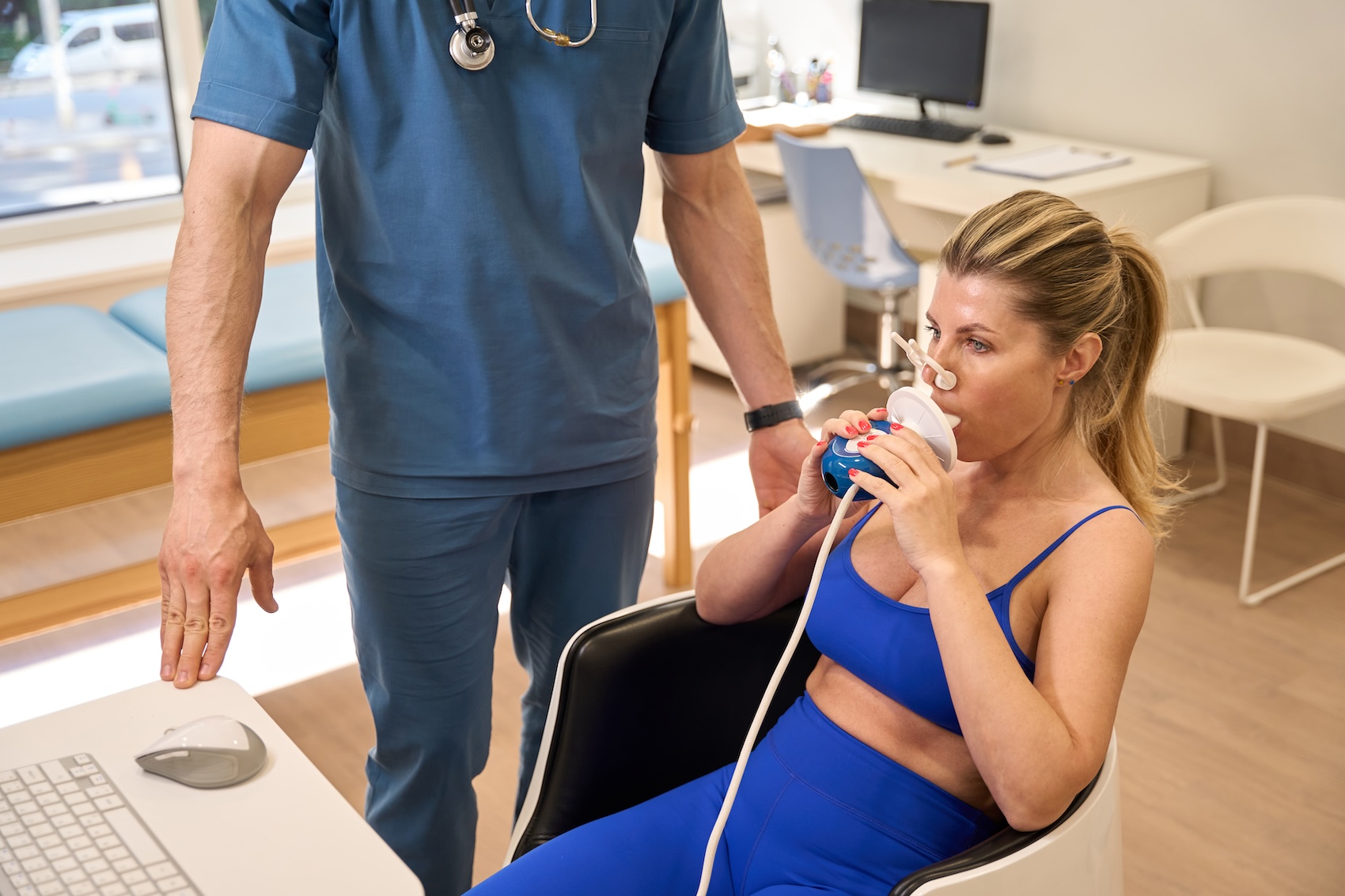
Traditionally, VO2 max testing was conducted in a lab setting using a treadmill or stationary bike with a mask that captured and analyzed your breath. It was accurate, but expensive and at times inaccessible for patients with injuries or limited mobility.
That’s where devices like the PNOE come in. At InterveneMD, we use the PNOE metabolic analyzer—a clinical-grade, portable device that delivers lab-accurate VO2 max testing in a practical, comfortable setting.
The PNOE measures your breath in real time during a simple exercise protocol, giving us a precise picture of how well your body is using oxygen, how efficiently you’re burning fuel (fat vs. carbohydrates), and where your heart rate training zones actually fall.
Unlike wearable estimates, which can be inaccurate, a PNOE-based assessment gives you data you can actually build a plan around.
Can You Improve Your VO2 Max?
Absolutely! That’s the good news. While genetics play a role in your baseline, VO2 max is highly trainable at any age. The most effective strategies include:
- Zone 2 exercise: Long, steady-state aerobic exercise (think conversational-pace walking, cycling, or jogging) is foundational for building an aerobic base and mitochondrial efficiency.
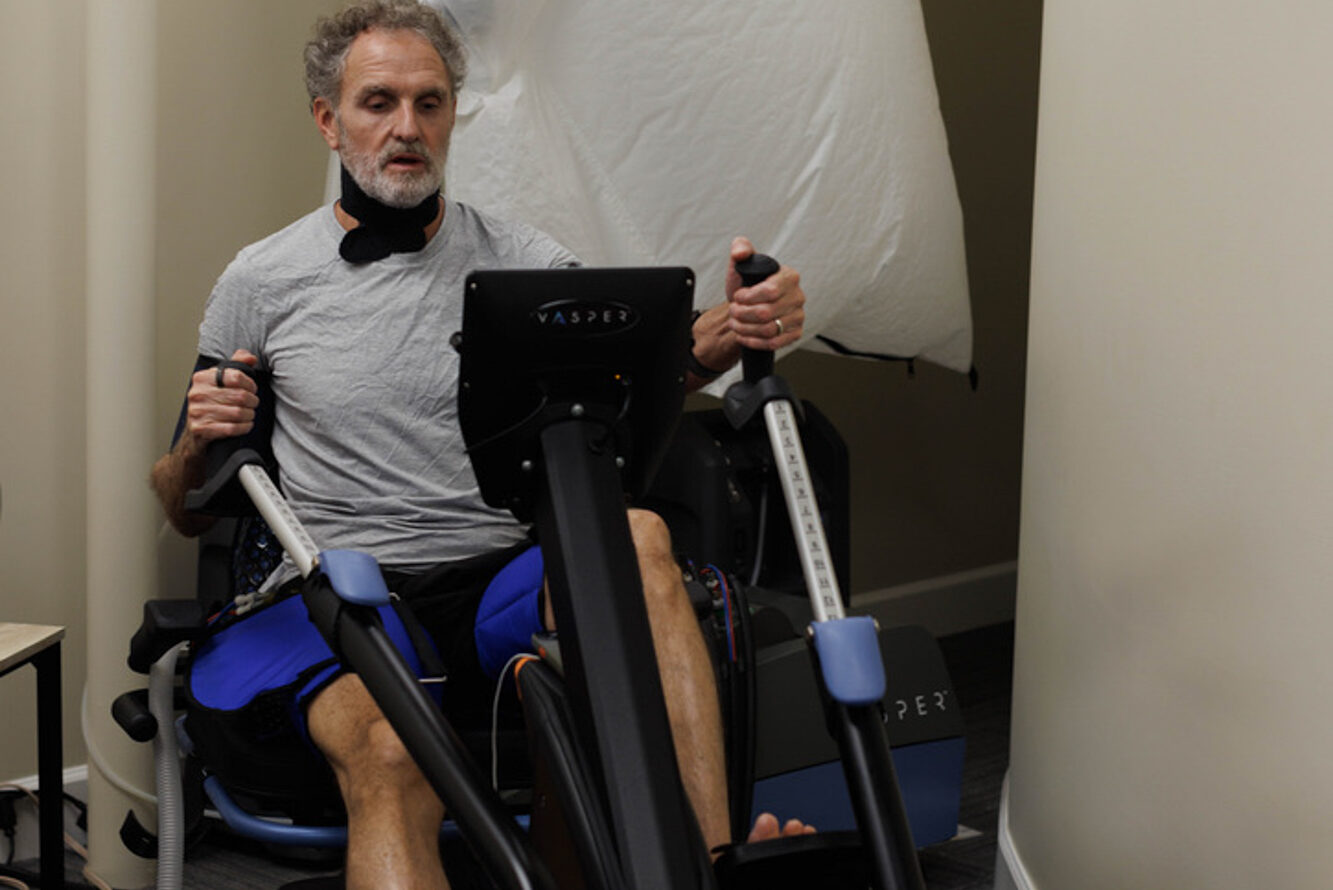
- High-intensity interval training (HIIT): Short bursts of intense effort followed by recovery periods are proven to raise VO2 max faster than steady-state cardio alone. At InterveneMD, we can simulate the physical effects of HIIT training with low-impact aerobic exercise using the Vasper system’s compressive and cooling technologies.
- Consistency over time: Like most meaningful health metrics, VO2 max improvements come from sustained effort. That means dedicating yourself to ongoing training, not a single hard workout.
Know Your Number
Most people have no idea what their VO2 max is, and that’s a missed opportunity.
Knowing your number:
- Gives you a meaningful baseline to track over time
- Helps you train smarter (not just harder)
- Provides insight into your overall metabolic health that a standard check-up simply doesn’t capture
If you’re curious about where you stand, testing your VO2 max in Charleston takes less than 30 minutes and gives you actionable data you can use right away. It’s one of the most informative things you can do for your health, regardless of your current fitness level.

Optimize Your Health Outcomes With Oxygen Insights
Ready to discover—and optimize—your oxygen utilization? Contact us today to schedule your metabolic assessment for VO2 max in Charleston.