When most people hear the word laser in a medical context, they think of surgery—cutting, cauterizing, or correcting vision. But there is an entirely different class of medical laser that does just the opposite. Instead of cutting or destroying tissue, therapeutic lasers stimulate its healing.
This field, called photobiomodulation (PBM) or low-level laser therapy, has been quietly accumulating one of the most robust evidence bases in physical medicine over the last three decades.
With over 700 randomized controlled trials published to date, it is now among the most well-researched nonsurgical interventions available for pain, inflammation, and tissue repair. And with the emergence of more sophisticated laser platforms, its clinical potential has expanded significantly.
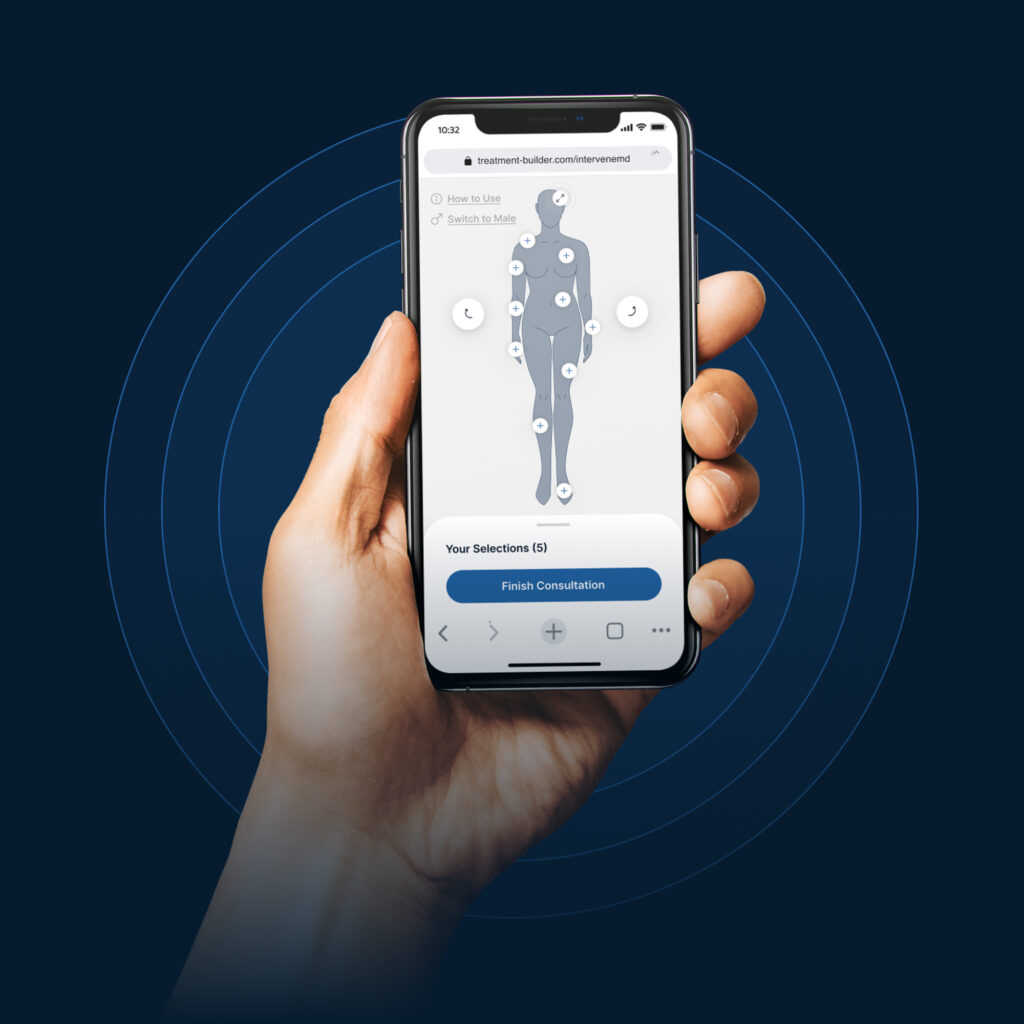
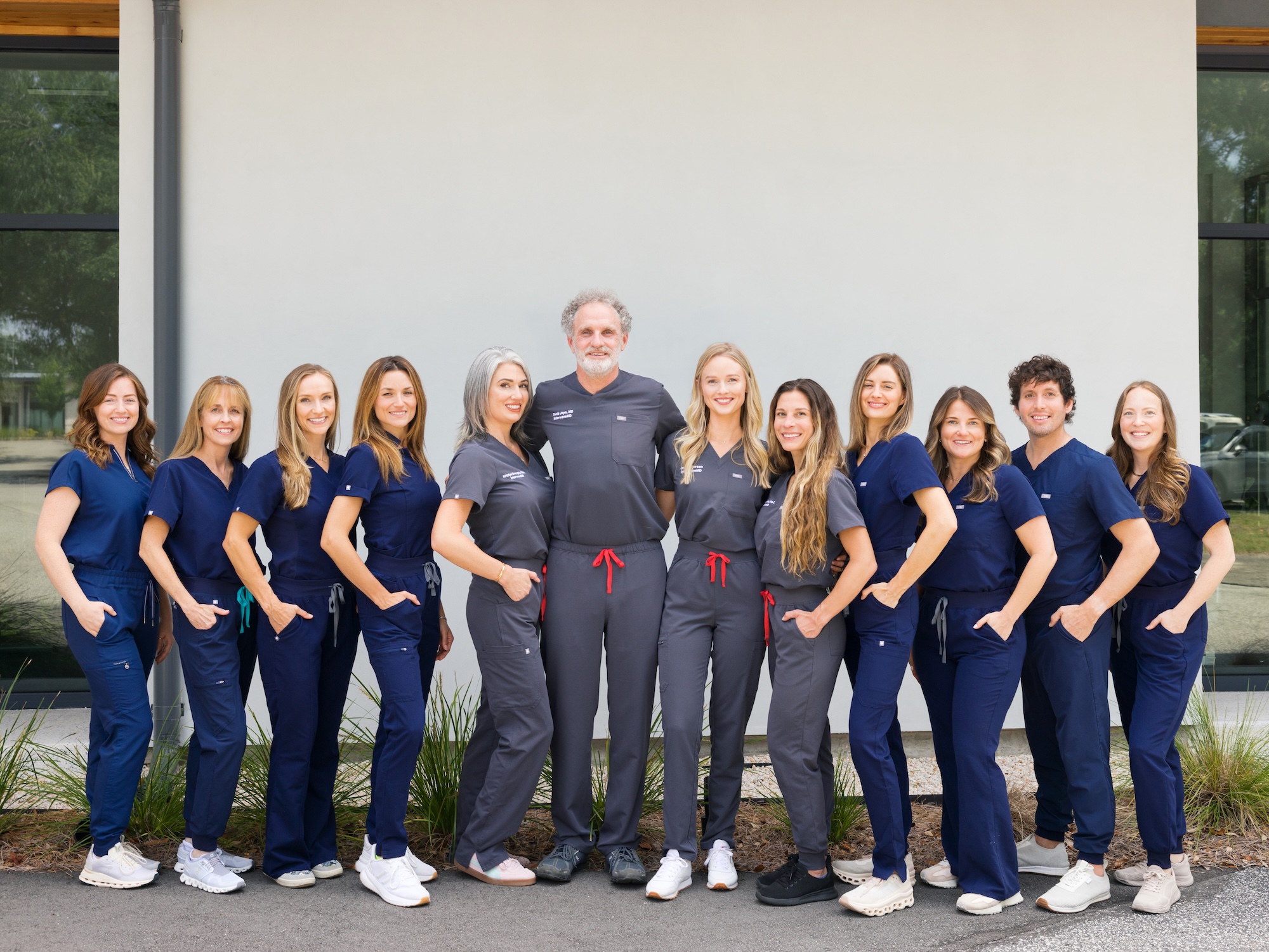
Continue reading to dive into Dr. Joye’s exploration of the restorative power of laser technology. To map out your personalized laser treatment at InterveneMD, schedule a consultation for MLS laser therapy in Charleston.
What Therapeutic Lasers Actually Do
The mechanism is elegant. Specific wavelengths of light—primarily in the red and near-infrared spectrum—penetrate the targeted tissue. Light-sensitive neurons (photoreceptors) inside the cells absorb this light. You can think of the laser as a solar panel for your body, with the light energy recharging your healing abilities.
This absorption triggers a cascade of biological responses:
- ATP production increases, giving cells more energy to carry out repairs
- Nitric oxide is released, improving local circulation and oxygen delivery
- Reactive oxygen species regulate, reducing oxidative stress at the treatment site
- The presence of inflammatory cytokines declines, while growth factors involved in tissue repair increase
The net result is faster resolution of inflammation, accelerated tissue healing, meaningful pain reduction, and improved cellular function in the treated area—all without drugs, injections, or recovery time. Best of all: a typical treatment session takes mere minutes. Patients feel warmth, sometimes a gentle tingling, and nothing more.
Our expert providers can administer MLS laser therapy in Charleston to address pain and inflammation in the:
- Muscles
- Tendons
- Ligaments
- Nerves
- Cartilage
- Bone
Importantly, photobiomodulation does not mask pain. Rather, it addresses the cellular dysfunction driving it. More energy, better circulation, less inflammation, faster repair. That is the mechanism, and the research consistently supports it.

Why the M7 MLS Is Different
Not all therapeutic lasers are equal. And the differences between low-quality and high-quality systems translate directly into your clinical outcome. The critical variables are:
- Wavelength
- Power
- Pulsing pattern
- Penetration depth
Our practitioners use the M7 MLS laser for therapy in Charleston.
The M7 MLS (Multiwave Locked System) represents the most state-of-the-art therapeutic laser technology on the market. What distinguishes it from conventional single-wavelength lasers is its simultaneous delivery of two synchronized laser wavelengths: 808nm continuous wave and 905nm pulsed light locked together in a patented emission pattern.
These two wavelengths are not simply combined; they are precisely synchronized so that their biological effects work in concert rather than independently.
Synchronized Laser Penetration
The 808nm wavelength delivers deep tissue penetration with continuous anti-inflammatory and pain relief effects. The 905nm pulsed wavelength adds an anti-edema and tissue repair signal, preventing fluid buildup and promoting healing.
Clinical research shows that synchronized delivery of both wavelengths produces significantly greater therapeutic outcomes than either wavelength delivered alone, fostering faster pain relief, more complete inflammation resolution, and better functional recovery.
Precise Robotic Scanning
The M7 platform takes this further with a robotic scanning delivery system that ensures precise, uniform coverage of the treatment area, eliminating the variations in provider performance that can affect manual laser application.
This fosters consistent dosing across the entire target tissue, a feature especially relevant when treating larger areas like the lumbar spine, hip, or knees.
Research-Backed Results
The clinical research on the MLS laser includes peer-reviewed studies documenting significant outcomes in:
- Knee osteoarthritis
- Plantar fasciitis
- Shoulder tendinopathy
- Post-surgical recovery
- Neuropathic pain
- Spinal conditions (like chronic low back pain)
Therapeutic MLS laser technology has FDA clearance and is commonly used in professional sports organizations, orthopedic practices, and leading integrative medicine clinics.
For patients who have been told their only options are pain medication or surgery—or those who have tried those options and found them insufficient—therapeutic laser treatment with the M7 MLS represents something genuinely different.
This technology offers a noninvasive, drug-free, mechanism-driven approach to healing that works with the body’s own biology rather than around it.
Free Yourself From Pain
You don’t have to suffer through pain, or undergo treatments that only temporarily cover up your symptoms. Our expert practitioners can target your pain at the source and stimulate tissue repair on a cellular level with regenerative MLS laser therapy in Charleston.
Just look at this sophisticated dual-wavelength technology improved one patient’s quality of life:
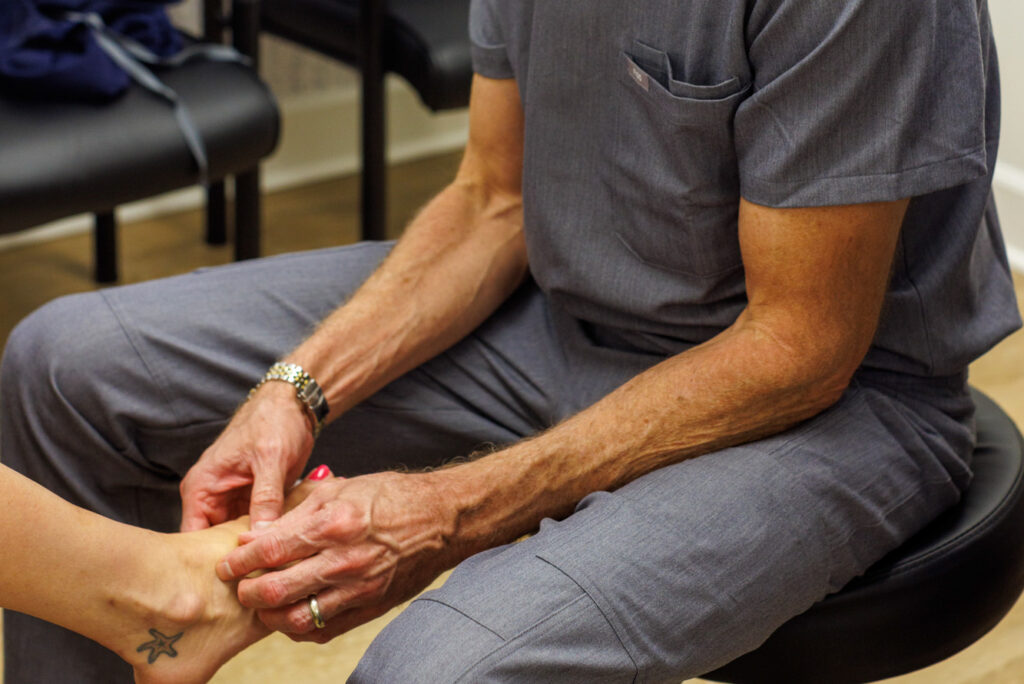
“I walked in, barely able to put weight on my heel. After 3 sessions with the MLS Laser, the pain had dropped by 80%.” – J.S.
Activate Your Healing Powers From Within
When your body has the tools to effectively fight inflammation, you can feel like yourself again and get back to doing what you love. Let us support your healing journey with thoughtfully implemented MLS laser therapy in Charleston.
Note:
This content is provided for educational purposes only and reflects current research and clinical thinking in functional and integrative medicine. It is not a substitute for personalized medical advice. Every person’s biology is different; what works for one individual may not be appropriate for another.
If you are curious about the therapies discussed here, we encourage you to schedule a consultation with a qualified provider who can evaluate your specific needs and goals.